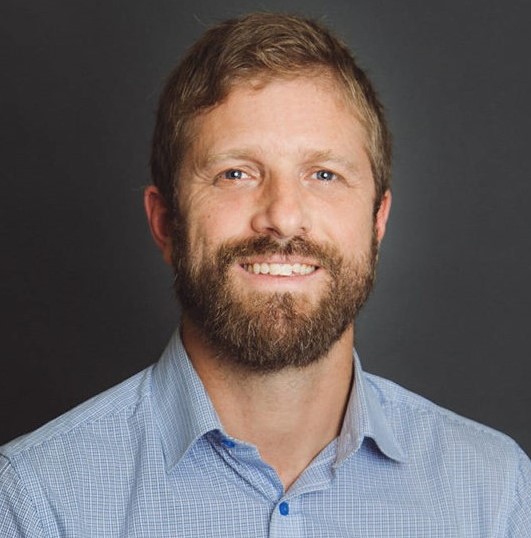
Students, workers must stand together

Letter to the Editor of the Marlet (Victoria), 7 January 2004

Since 2001, tuition fees at UVic have been artificially inflated to serve the BC Liberal agenda of privatizing the costs of post-secondary education. How else do we explain an $18-million budget surplus? A government-funded model, accessible to low-income students, is being replaced with a user-fee model, where only the rich can afford an education.

Sadly, UVic administrators have been complicit in this unethical plan. The current labour dispute has situated teaching assistants at the forefront of the struggle for publicly funded education. It is the duty of all progressive members of the university community to stand with CUPE in this fight.

“The longer the line, the shorter the strike.” Students, professors and other workers must band together, striking a blow against the agenda of greed that is sweeping across this province. A line has been drawn in the sand. Which side are you on?

Categories: Commentary | Tags: , , , | Leave a comment

Reduce tuition fees

Opinion-editorial article published in The Brunswickan (Fredericton), 7 November 2003

Several years ago, I worked on a campaign that resulted in a five per cent reduction in tuition barriers to education at the University of Victoria. This was achieved through an increase in the annual grant from the government of British Columbia to the university. There is no reason why a similar step could not be implemented here at UNB.

Our taxation system exists to ensure a fair distribution of resources. Rather than increase tuition barriers each year (preventing low-income students from accessing an education), UNB should set a precedent in the Maritimes by returning to a progressive, government-funded model of education.

In 1996, Ireland eliminated tuition barriers. The ‘Irish Tiger’ economy – one of the strongest in Europe – draws heavily from a highly trained, well-educated population. Students are not penalized, impoverished and indebted with escalating user fees. Instead, universities receive sufficient resources from their government to make tuition unnecessary. This provides an incentive to receive an education, rather than a disincentive, as currently exists in New Brunswick.

In the 1960s, Newfoundland embarked on a similar experiment of free education. This occurred under the Liberal premier, Joey Smallwood. While this program was never fully implemented, Newfoundland reduced tuition by 25 per cent in 2002. That same year, the government of Manitoba reduced undergraduate fees by 10 per cent.

Such models exist in a number of different countries. France, Austria, Switzerland, Denmark and Sweden all offer free, or extremely low, tuition. Students receive monthly grants from their governments, between $200 and $600 per month, to help cover living costs. Tuition is paid for by the state. Why not in Canada?

For several years, the United Nations ranked Canada as ‘the best country in the world to live.’ We have recently slipped from this position. So-called ‘free trade’ agreements, combined with the neo-Liberal policies of Mulroney, Chretien and Martin, have eroded Canada’s progressive social system. As (then finance minister) Paul Martin slashed transfer payments in 1995, the Young Liberals of Canada successfully split the student movement of the country. The Canadian Alliance of Student Associations (CASA) was formed as a counter-weight to the left-leaning Canadian Federation of Students (CFS). University students lacked the unity to prevent a frontal assault on state-funded education. The result is crippling debt that in many cases exceeds $40,000 per student.

Conforming to NAFTA, the WTO, and similar agreements, our political leaders are eager to harmonize public services with the private, for-profit model pursued in the United States. The doubling of tuition barriers across Canada in the 1990s demonstrates this trend.

UNB now finds itself at a crossroads. Our premier, Bernard Lord, occupies a tenuous position at Province House. Leading a minority government, there is an opening for public policies that would usually be unthinkable to right-wing politicians like Lord. (Before the last election, his majority government laid the groundwork for the privatization of NB Power.) Weakened in the legislature, the Lord government can be pressured to increase funding to UNB – several million dollars would be sufficient – to reduce tuition fees.

How can this outcome be achieved? First, the students, staff and administrators at UNB will have to discard the idea that “tuition increases are inevitable”. Such narrow, illogical thinking is uncharacteristic of educated people. The purpose of a university education is to challenge conventional notions, not parrot them.

Second, the university community will have to organize itself into a force that the provincial government cannot ignore. Through discussion, debate, public meetings, petitions, and demonstrations, the UNB community – combined with the general public – will have to translate its will into government policy, and government funding.

The final ingredient in this equation involves a change of mindset. While I am a newcomer to New Brunswick, I have observed a pervasive culture of ‘Paternalism’ in this place, which is much weaker elsewhere in Canada. I see it regularly in dealings with landlords; in the way workers accept low wages with no job security; in the unwillingness of intelligent students to question authority and take action to defend their interests. Right now, I sense a powerlessness among many of my peers on this campus, and throughout the Maritimes. But this situation can change. And it will change.

UNB will move towards a zero-tuition model. I would like to see this process begin in spring 2004, when the next budget is presented to the Board of Governors. I have faith in the capacity of ordinary people to assert, through education and organization, their own inherent power.

In the words of the rock band Trooper, “We’re here for a good time, not a long time.” So let’s have a good time creating some social justice on this campus and beyond.

Categories: Commentary | Tags: , , , | Leave a comment

Irving, Liberals and working people

Letter to the Editor published in The Brunswickan (Fredericton), 6 November 2003

Reports have surfaced, confirming that federal Liberal cabinet ministers received favours from the Irving corporation. Minister of Labour Claudette Bradshaw hitched a free ride in an Irving jet. Justice Minister Allen Rock received similar perks of office. Conservative MP and former Saint John mayor Elsie Wayne has also flown for free a la Irving. Too bad the fruits of the Irving gravy train are not distributed more equally.

This should be no surprise to thinking people. Rather, it confirms what we have long suspected: that an economic and political oligarchy rules this province and country. Through an intricate web of personal favours, media concentration, and class interest, the wealthiest Canadians control the levers of government, ensuring public polices defend, rather than redistribute, power and privilege.

This fact is starkly demonstrated by a $55-million federal grant to Irving to shutdown the Saint John shipyard. The logic evades me. Public dollars are being handed over to the richest family in New Brunswick, to eliminate an economic enterprise as well as the jobs and opportunity it affords? Prime Minister Paul Martin has already confirmed that this deal will go through once he assumes power next year.

If the Chretien gang demonstrated frequent ethical lapses, the Martin government will only get worse. Our next political leader is a former owner of one of the largest shipping companies in Canada – Canadian Steamship Lines. There is a ship named after his father: the Rt. Hon. Paul Martin. In a compelling display of patriotism, Paul Martin Jr. sailed his ships under foreign flags, such as that of Liberia, to avoid paying pesky taxes to the Canadian government. To some this would be considered high treason. To others, astute business practices.

As Finance Minister, Paul Martin delivered over $60 billion dollars in tax cuts, the majority to corporations such as Irving. In the same period, transfer payments to universities and hospitals were slashed, leading to a doubling in tuition barriers and the privatization of healthcare jobs and services.

Our political and economic system would be a tragedy, if it weren’t such a glaring farce.

Political participation is sorely lacking in this country. Many Canadians are still blinded by corporate media lies, from Irving mouthpieces such as the Daily Gleaner and the Telegraph-Journal. Those who have learned to think critically too often retreat into the paralyzing corners of cynicism and defeat.

Political participation is no longer an option. It is a moral imperative to everyone who believes that poverty and unemployment have no place in a country such as Canada, vested with trillions of dollars in resource wealth and human capital.

It is time for the students and faculty at UNB to descend from their Ivory Tower and join the larger community in the streets and in the parliaments of this country. The rule of Irving, Martin and their gang must be brought to an end. We must spread the idea that a more cooperative and just social order can be established in our time.

Categories: Commentary | Tags: , , , , , | Leave a comment

Sodexho makes me want to barf

Letter to the Editor published in The Brunswickan (Fredericton), 1 October 2003

As someone who is new to UNB, I find it strange that students and staff have little choice when it comes to healthy, affordable food. Why has this university handed over such an essential service to the private sector?

It may be common to privatize food services in the Maritimes, but I know that other Sodexho operations offer more choice than Harvey’s, Pizza Pizza, and Mr. Submarine. Come on. This is insulting to the health and the intelligence of the university community. Slightly better food may be available in a handful of campus buildings, but the overall problem remains the same. UNB has contracted food services to a for-profit corporation, with no connection to the people of Fredericton and little concern for the health and well-being of the student body.

Other universities offer university-run food services as well as student-run operations. This brings in revenue for the institution and the student union. That is the idea behind having a Student Union Building. To provide a forum for discussion and action, and to provide affordable services and decent jobs for students.

The mythology about privatized services being ‘cheaper’ or ‘more efficient’ is crap. A profit margin exceeding 15% and an inflated bureaucracy remove any savings to students. Further, privatized services are rarely unionized, providing low wages, few benefits, and no job security for food-service workers. The fast-food sector is notorious for union busting.

We’re getting a raw deal from Sodexho on all accounts.

I think a priority of our university should be to put an end to this farce and practice what it preaches. Are we ‘Making a Significant Difference’ by following the flock and signing a deal with Sodexho? Are we ‘Making a Significant Difference’ by gouging students with escalating tuition barriers and then gouging them again at the cafeteria? Are we ‘Making a Significant Difference’ by putting corporate profits ahead of the health and well-being of students? Is this truly an environment conducive to creative, intelligent learning and discourse?

Now, I’m a historian rather than a nutritional expert. But even I know that Harvey’s and Pizza Pizza can hardly be considered ‘Brain Food.’ ‘Brain Food’ has been processed as little as possible between the producer and the consumer, not shipped across four continents over a span of 14 months. ‘Brain Food’ is heavy in fresh vegetables, whole grains, and alternative sources of protein, not soaked in lard.

Why not provide students with good food rather than junk food so they can think clearly and live healthy during their time in school? Sodexho has failed in this task. Its raison d’etre is to transfer money – and a lot of it – from students to shareholders. UNB should cut its losses, and tell this company that it is no longer welcome here.

Categories: Commentary | Tags: , , , , , | Leave a comment

Got tuition?

Letter to the Editor published in The Brunswickan (Fredericton), 18 September 2003

I couldn’t help but notice the ‘Got Tuition’ posters all over our campus. I applaud the student union for raising the profile of tuition barriers to education. But I’m not sure a 50-50 raffle is the solution.

If we’re going to discuss a tuition credit, why don’t we talk about a tuition credit for every student at UNB?

That’s exactly how the deal works in France, Ireland, Austria and many other European countries. In fact, the government pays your tuition and provides a monthly grant to cover housing and food. I’m not making this up.

Let me emphasize that the system over there is not perfect. Many students are streamed into the trades at an early age and prevented from attending university. But this European model of funding post-secondary (what they call ‘tertiary’) education should be seriously considered by decision-makers in New Brunswick.

People will say this is utopian, that the money isn’t there. I don’t buy it. Our country is wealthy, among the richest in the world, in terms of its natural resources and its people. The problem is how this immense wealth is distributed. If the Irving empire shared even a tiny portion of its billions, there would be jobs, opportunity, and free post-secondary/tertiary education for every person in this province.

The hard part is organizing students and communities to fight for their rights.

Got Tuition? Don’t mourn. Organize.

Categories: Commentary | Tags: , , | Leave a comment

The NDP and extra-parliamentary action: Lessons from BC

Published in Confrontation (Vancouver), August 2003

May 16, 2003 marked the two-year anniversary of the Campbell government’s election to office in BC. Having crippled NDP representation in the legislature, vested interests have embarked on a determined campaign to wipe out 50 years of social progress. And the Left has been unable to resist this assault.

After 10 years of NDP rule, the Right is privatizing the public sector and enacting various measures to weaken the bargaining power of labour. One of the most vocal groups opposing the government’s agenda has been the Hospital Employees’ Union (HEU), an organization known for its independent stance and willingness to adopt militant industrial tactics, including illegal strike activity. The HEU has been singled out for destruction by the government and private health-care corporations. Notorious Bill 29 tore up collective agreements to allow the privatization of 30,000 HEU jobs.

The HEU, an affiliate of CUPE, has played a major role organizing Community Coalitions across BC to stop the implementation of the government’s plans. Pulling together senior citizens, anti-poverty activists, students, environmentalists and trade unionists, these coalitions have provided a centre of resistance against the Campbell government. Initially, the labour movement supported the coalitions and the Fightback. Resources were donated to organize demonstrations and other events, such as a rally on Feb. 23, 2002 that drew 25,000 people to the provincial legislature.

However it became clear that expressions of solidarity were restricted to certain acceptable boundaries, which fell far short of the tactics necessary to reverse the government’s agenda. No ‘Days of Action’ on the scale of Ontario in the late 1990s occurred. A general strike was advocated by militant sections of the labour movement, but the leadership refused to consider this course of action. A unified, determined response evaded British Columbia’s Left.

The reasons are complex. One important influence involves conflicting strategies internal to the BC NDP. Reduced from power to two seats in the 79-seat legislature, NDP members and leaders are united on the need to rebuild the party. But they are divided on the best means of rebuilding. Some wish to restrict our activity to the electoral arena, allowing the cuts to deepen and ripen the mood for political change.

An opposing viewpoint believes the NDP should be at the forefront of the extra-parliamentary struggle. It is only by embracing the cause of HEU workers, the poor, and other besieged groups that the party can rebuild trust with the disenfranchised, and build up the organization necessary to win the next election. Solidarity must be expressed in both word and deed.

In my opinion, New Democrats should be at the forefront of every strike and demonstration, showing the Canadian people that our party is the agent of social change, both inside and outside the legislative halls of the country.

In 1925, prior to winning re-election to the House of Commons, CCF-NDP founder J.S. ‘Jim’ Woodsworth wrote: “Political power must be based on industrial power.” Sadly, this rule rarely informs the strategy of our movement.

The BC experience since May 2001 offers a valuable lesson for New Democrats and allies across the country: it is not enough to resist vested interests at election time. A strong, participatory organization is needed between elections to secure and defend advances toward socialism.

Categories: Commentary | Tags: , , , , , | Leave a comment

People before profit

Letter to Editor of the Victoria Times Colonist, 7 May 2003

Re: Letters, “Harper Speakers for Most Canadians,” May 7.

“Canadianess” is not only defined in terms of opposition to US foreign policy. In many areas of social policy, Canadians have succeeded in forcing their governments to act in the common interest. Universal Medicare is the most notable example, an example that Stephen Harper and the Canadian Alliance seem hell-bent on destroying (along with our misleaders in the provincial Legislature).

The entrenched two-party system in the United States has consistently acted as a barrier to social progress. The Conservative-Reform-Alliance shuffle in recent years represents an attempt by vested interests to re-establish a two-party system in Canada. The twin parties of business have traded power in Ottawa since 1867. Isn’t this long enough?

Jean Chretien’s position on Iraq represents an attempt to out-flank the sleeping giant of Canadian politics: an independent people’s party committed to the principle that people are more important than profits, and that cooperation – both internationally and at home – must triumph over a greed-driven, war-ridden system.

Categories: Commentary | Tags: , , , | Leave a comment

Take sides

Opinion-editorial published in the Martlet (Victoria), 15 March 2003

It is comfortable to pretend we are a big, happy family. Father knows best…

Current circumstances make such a stance impossible. Our country is sending battleships and troops to escalate the war against Iraq. The BC Liberals are levelling our social infrastructure to nineteenth-century conditions, pushing poor and disabled toward suicide. Striking workers at UBC are being run down on their picket lines. Those who deny the necessity for social transformation are either insulated by deadly wealth or too tired or timid to raise their voice.

On our tiny, delusional corner of the earth, UVic administrators insist on leveling a stand of mature Douglas Fir forest that stands in the way of their landscaped distopia.

Wake up.

I mean that in all sincerity. UVic students and workers have the privilege and the duty to lead the charge against war, racism, and privatization. Yet they are confronted with the backward vision of the dinosaurs who run this campus. Gordon Campbell “returned autonomy” to this university, and administration wasted no time in doubling tuition fees. The assault on low-income students is paralleled by the destructive trajectory of campus “planning”, with the Cunningham clearcut of Dec. 27 awkwardly anticipating an ugly sibling.

A climate of fear – dare I say terror – grips this campus and our world. Those who refuse to conform are bombed, beaten, bulldozed, or blindly legislated into submission.

Over 1400 students, staff, and area residents signed a petition calling for no further deforestation on this campus. Somehow, the Campus Development Committee accepted the lies of a so-called “environmental impact assessment”, which concluded – surprise, surprise – that a Douglas Fir forest was similar in ecological value to a vacant lawn.

Over 300 faculty signed a letter demanding an overhaul of the campus planning process, yet somehow building-by-building development continues to decimate our campus’ vanishing natural spaces. These “Living Classrooms” – or “Special Ecosystem Research areas” – are no match for university “leaders” who rush blindly toward conformity.

God forbid a university should depart from meaningless “input” and embrace genuine participation! God forbid UVic should build its next building on a vacant lawn that has sat vacant since 1961 while dozens of acres of adjacent forest have been built over! God forbid university professors, deans, and scholars should uphold their right to think and act critically!

This is my final semester at UVic. No doubt, many will welcome this news. But to all those who refuse to stick their heads out of the bunker: mushy-middle liberalism has led us directly to war, poverty, and ecological collapse. The middle ground has disappeared. Refusing to take sides unfortunately means you are siding with the powerful who control all our resources and make all our decisions. Step out of line, and you get bombed.

The only hope for a future that is no longer divided into two opposing sides is to take the courageous step of siding against the status quo.

Categories: Commentary | Tags: , , , | Leave a comment

Take a stand against Liberals

Letter to the Editor of the Victoria Times Colonist, 17 February 2003

It is no longer enough to simply disagree with the Liberal agenda.

The 60 per cent of Victoria citizens who cast their ballots for NDP and Green candidates must use their majority mandate to shut this government down.

In the Legislature, the Liberals have near-absolute power. But democracy is about community empowerment, public participation, and local control. The decisions Campbell and his corporate backers are making have immediate, violent consequences in our community.

A child whose mother is kicked off social assistance and loses access to affordable housing and daycare will have more difficulty succeeding in life. A poor person, barred from attending college or university by exorbitant user fees, will have no option but to set up camp on our streets. Women and children who are vulnerable to abuse will have their lives endangered by the Liberal cuts.

Why? So large businesses and wealthy citizens get Campbell’s ‘dramatic tax cut.’

The NDP balanced three consecutive budgets in BC, and provided necessary social services and well-paying jobs. The Liberals have thrown the province back into the red to fund their tax cut, and jobs and services are being slashed. BC Hydro, BC Ferries, ICBC, and our highways may be sold to Campbell’s backers, with price increases for the rest of us.

The Liberals have no mandate to roll back the clock of social justice by half a century. Victorians did not vote for them. We have an obligation to educate ourselves, organize, and mobilize to stop this brutal, immoral, and inhumane agenda.

Categories: Commentary | Tags: , , , | Leave a comment

Lowe was beatable

Letter to Lower Island News (Victoria), November 2002

As the dust settles on Victoria’s municipal election, it is important to consider a bold proposition:

Alan Lowe was beatable.

My campaign won 5047 votes to Alan Lowe’s 9655. As I told our mayor at his victory party on the night of Nov. 16, he ran a strong campaign and was clearly the victor. His campaign workers and his supporters deserve a hearty applause.

But in the interest of understanding and appraising the outcome of the 2002 municipal vote, the question of “unbeatable” Lowe must be addressed.

Voters were barraged with this message, well before the campaign began in early October. The leadership of the Victoria Civic Electors accepted it when they refused to endorse my candidacy. The organizers of numerous “All-Candidates” Meetings confirmed it when they refused to allow debate on the mayoralty race. Throughout the campaign, I had only one opportunity to debate social issues with Mayor Lowe. Television and radio stations made no effort to broadcast such a debate over their airwaves.

Indeed, the powers that be declared Alan Lowe victorious the moment he put his name forward last July. My nomination was branded ‘fringe’, and any substantive discussion of my election platform was kept outside the media spotlight.

But defying this subversion of the democratic process, 5047 Victorians voted for a socially and environmentally responsible community. I suppose that makes one-third of local voters ‘fringe’.

In Vancouver, where left-wingers united behind the Coalition of Progressive Electors slate headed by mayor-elect Larry Campbell, the conservative ‘Non-Partisan’ Association was swept out of power. COPE won every council, school board and parks boards position it contested. A coalition of the NDP and radical leftist groups, COPE directed the anger against the Campbell Liberals into a stunning electoral success.

In Victoria, such a victory wasn’t to be. In five weeks, my independent campaign – headed by three 24-year-old rabble rousers – garnered the support of the labour movement, environmentalists, and hundreds of individuals who had never voted before. With one month’s organization, we nearly equaled the vote of the last two left-wing mayoral candidates, and surpassed David Turner’s 1990 victory by over 1000 votes. So much for a ‘fringe’ campaign.

Had the Left united in Victoria, COPE’s stunning Vancouver victory could have been replicated on this Island. Voter turnout in the mainland city spiked to over 50 per cent, a remarkable showing for a municipal campaign. In Victoria, only 17,000 people – less than one-third of the registered voters – cast a ballot on Nov. 16. Of these, two-thirds voted for Alan Lowe. In terms of eligible voters, about 15 per cent voted our Mayor into office. When 50,000 citizens stay away from the polls on election day, something is clearly wrong with our political system.

I want to make it clear that I congratulate Alan Lowe on his decisive victory. But I ask the organizations that declared him “unbeatable”: What have you done for democracy?

Categories: Commentary | Tags: | Leave a comment

Here, here, here

Letter to the Editor published in the Victoria Times Colonist, 13 August 2002

I am 24 years old and writing in response to a recent article on youth leaving Victoria (“Gone, Gone, Gone,” Aug. 11).

This trend cannot be blamed on the absence of a sports arena and concert venue. Such partisan reporting may bolster commercial interests, but it does nothing to explain why young people are leaving this city. The role of the provincial government is barely mentioned.

Youth are leaving Victoria because their tuition fees have skyrocketed, affordable housing is scarce, and well-paying jobs are non-existent.

The case studies focused on those who left prior to May 2001. This displaces blame from where it belongs: squarely on the shoulders of Premier Campbell and his caucus. Young people are leaving because of the Liberal assault on youth and other marginalized groups.

It is now harder to form unions to protect wages and conditions from unscrupulous employers. It is harder to house and feed oneself. It is harder to access medical care and post-secondary education. It is harder to demonstrate entrepreneurship in the face of multinational control of our economy, compounded with depressed local conditions.

The Campbell Liberals answer only to the corporations that funded their conquest to power. And so youth are abandoning Victoria in search of greener pastures. But stubbornly, some young people remain, and we will not rest content until the people bring down this government and vanquish its corporate agenda from our Island.

Categories: Commentary | Tags: , , , , | Leave a comment

Socialism is not an evil

Letter to the Editor of the Victoria Times Colonist, 11 August 2001

In a recent editorial, this newspaper suggested the NDP needs to resist the agenda of the New Politics Initiative. Socialism should be rejected in favour of Tony Blair’s moderate program in Britain, we are told.

I fundamentally disagree.

The problems facing our people and our planet demand immediate attention. The route of the Alliance, Tories, and provincial and federal Liberals is the wrong path.

Supporters of both the NDP and Green parties need to re-evaluate their political allegiances and join the movement to redefine the electoral voice of progress.

It is no surprise that this newspaper rails against the NPI.

But using the USSR to prove the failure of socialism ignores dozens of examples of progressive goverance across the world.

Sweden. Germany. France. Denmark. Switzerland. New Zealand.

Places where proportional representation, mass mobilization, and trade unionism have won a better life for the citizenry. In our province, when the cutbacks come to fund the tax cut for the rich, the people must voice their opposition powerfully.

For the past decade, I believe the New Democratic Party led British Columbia down the proper path. But there are now 77 Liberals opposed by two NDP MLAs in the house. A fresh effort to fuse social movements with progressive policies is needed now like never before.

Categories: Commentary | Tags: , , | Leave a comment

Remembering Carlo Giulliani

Earlier this summer, a 23-year-old Italian named Carlo Guilliani was shot dead in Genoa. As tens of thousands protested a summit of the G-8 powers, the young man was captured on film raising a fire extinguisher above his head, apparently poised to smash the window of a police jeep.

A moment later, Carlo was shot at point blank range by a terrified officer in the vehicle. One bullet entered his left cheek below the eye, while another pierced his neck. As the life left his wounded body, the jeep drove over him before speeding away.

Carlo would never again see the light of day.

‘Protesters get their martyr,’ newspapers proclaimed. “What would you have done if you’d been in that jeep?” a leading Canadian academic asked a caller on CBC Saskatchewan.

To me, who was right and who was wrong hardly matters. Deploying a police jeep into a crowd of protesters in inherently provocative. Threatening to smash the vehicle with a fire extinguisher is brave but ill-conceived when the passengers are armed.

Regardless of where blame lies, Carlo Giulliani’s death exposes a troubling reality: we say we live in a democracy, yet our leaders cannot hold meetings without the police using lethal force to protect them. The newspapers tell us the problem is “violent protest,” but this line of argument is beginning to wear thin.

“Trade protest turns violent,” the Times Colonist proclaimed the day after the WTO demonstrations in Seattle two Novembers ago. I was there, and witnessed a military campaign where US Special Forces troops, National Guardsmen, and Seattle police used concussion grenades, tear gas, armoured personal carriers and rubber bullets to reclaim a city from a disobedient population. Corporate property was damaged as protesters fled the police onslaught.

Even if smashing the front windows of Nike Town and Starbucks qualifies as violence (a claim I believe to be suspect), the Times Colonist failed to identify the violence perpetrated by the state against the thousands of peaceful citizens.

Then protests spread to a meeting of the International Monetary Fund and World Bank in Washington, DC. The Organization of American States was targeted in Windsor, Ont. and the World Petroleum Congress in Calgary. From Prague to Nice to London this new “anti-globalization” movement came into being.

Quebec City was tranformed into a warzone last April for the Summit of the Americas, when 34 leaders met to draft the contentious Free Trade Area of the Americas. A wall was erected around the city to stifle the people’s movement. When a group of courageous individuals tore down sections of the wall, they had somehow acted “violently,” justifying the deployment of 20,000 cannisters of chemical weaponry in the city. NDP MP Svend Robinson was shot in the leg with a rubber bullet.

Then a meeting of European leaders turned ugly in Sweden. Live ammunition was used and three people were shot, none fatally. A pattern was beginning to emerge, with the police upping the ante against a movement that refused to go away.

On July 20, 2001 in Genoa, Italy, Carlo Giulianii was shot and killed.

Call him a martyr. But Giulianni is less a martyr than a symbol. Dozens of people die at the hands of the state every week in the more oppressive nations on earth. But for some reason Carlo’s death was different. To people in the sheltered and privileged societies of the West, it challenged to the core their understanding of “Democracy.”

Anyone who had ever protested an issue understood that it could have happened to them. Conspiracy theorists will say that Giuliani was shot for this very reason, to stifle the growing support for the new people’s movement: if allegiance to corporate capitalism cannot be maintained through reason or gentle persuasion, a good dose of fear may be order.

State violence remains the ultimate mechanism for preserving the status quo. It is the last resort of the powerful in their war against popular empowerment.

The “anti-globalization” movement seeks to end corporate domination of the world’s people and resources. It seeks co-operative community solutions to global problems. And it rejects the profit motive as the organizational principle of society. It is a revolutionary movement that fundamentally threatens the interests of the individuals and institutions that presently run the economy and reap the rewards.

Slave revolts have always been bloody. But the challenge of this movement is to achieve radical goals on the basis of a broad and hopeful consensus. When force is used against the movement citizens may respond in kind. But my vision of a brighter future doesn’t involve clashes between police and protesters and more bodies piling up.

Armed with the memory of Carlo Giuliani, I am working toward the day when police officers throw down their guns and raise their fists in solidarity with their community. This is what democracy look like.

Categories: Commentary | Tags: , , , , | Leave a comment

Liberals sworn in as Victorians mourn

Published by Victoria Independent Media Centre, 4 June 2001

With a fiery coffin in tow, over a hundred Victorians publicly mourned the coronation of the Campbell Liberals on June 4.

The day began with a funeral procession from the city’s courthouse to the provincial legislature. Participants staged a “die-in” on the steps of the People’s House, as representatives of First Nations from across the province converged for a rally. A march proceeded from the downtown core to regal Government House, home of former Social Credit party Cabinet Minister and current lieutenant-governor Garde Gardom.

As Liberal Party leader Gordon Campbell and his 27 Cabinet ministers stumbled through the oath of office, the People’s Opposition rallied outside the locked gates.

“We’re taking it easy right now,” Jay Kay, a member of the Native Youth Movement, told the crowd. “What are they going to do when we really get together? We’re not going to get pushed around any more.”

Horse, another member of the movement, had strong words for those inside the Government House gates.

“They still want us to beg for everything. They want people to think a certain way. When you unplug from society — when you start realizing the way things really are — you won’t be able to feed yourself on their dollars anymore.”

Rockland Road, a treed thoroughfare running the length of the vast estate, was blocked for the duration of the 3 hour festivities. Liberal supporters and civic dignities toasted a return to “normal” business relations after an anomalous decade of social-democratic rule.

Labour activists from BC Government & Service Employee’s Union (BCGEU), Canadian Union Public Employee’s (CUPE), Canadian Union of Postal Workers (CUPW), and the BC Teachers’ Federation (BCTF) joined the rally outside the gates.  Along with the other participants they expressed foreboding over Liberal promises to declare education an essential service and allow scab labour on government construction projects.

“Teachers, throughout the history of British Columbia, have fought for the rights of children,” said David Chudnovsky, president of the BC Teachers’ Federation.

“Shame on Gordon Campbell for trying to take away the democratic rights of our union.”

Tuesday’s action was peaceful on both sides, though a Government House security officer grabbed a bicycle lock as unidentified youths attempted to lock one of the complex’s three wrought-iron gates.

But relations between police and citizens may grow stormy in Victoria as protest tactics reflect the depth of Campbell’s almost-certain cutbacks to the public sector.

“Seattle. Quebec City. Victoria. It’s the same struggle,” said Valerie Lannon, a member of the International Socialists who helped found We Are the Opposition, a new coalition organizing against the Liberals. “This government represents the same corporate agenda, and so our fight back needs to be the same as it was in those cities. He needs to get used to it.”

A rally is being planned for the day the legislature opens, which could be as early as late June. Premier Campbell has promised to implement a rigorous 90-day action plan, and some fear his government may approve a raft of regressive legislation while people’s minds are elsewhere during their summer holidays.

“We’re committed to organizing buses from Vancouver the day the legislature opens,” said Tony Tracy, from Vancouver’s All-People’s Coalition for Social Justice, in his address to the crowd outside the Government House gates.

While protesters gave departing guests their ear at the westernmost gate to the complex, Premier Campbell was discreetly whisked out of another gate in a dark green British sports car. Over four hours after leaving the Court House, rally-goers made their way back to downtown.

If there was any doubt as to whether Campbell would reward the powerful who bought his way into office, $1.3 billion in public revenue was ordered out of the treasury on Day Two of his mandate to fund his promised tax cut.

With nurses demanding fair wages, First Nations demanding justice and resources in land claims, and parents, students and teachers calling for accessible education for all, Premier Campbell chose to reduce the size of government.

He has jettisoned the former New Democratic Party ministries of Aboriginal Affairs, Social Development and Economic Security, Women’s Equality, Environment, Municipal Affairs, and Community Development, Cooperatives, and Volunteers.

The health ministry has been divided in two (paving the road to privatisation?). New ministries include Competition, Science, and Enterprise and the Orwellian Ministry of Public Security.

Change is clearly afoot in Victoria and across the province. With the NDP reduced to two seats in the legislature — having lost the Victoria ridings of Beacon Hill and Hillside by a total of 200 votes — the grassroots opposition has a hefty task ahead of it. But support exists. The combined NDP and Green Party vote polled in the two ridings on May 16 was over 60 per cent. Another 5 per cent voted Marijuana.

Campbell’s tax cut will return between $0 and $1000 to British Columbians with incomes below $50,000 per year. The Premier’s tax cut on his salary will exceed $3000.

The top income tax rate – for those earning over $80,000 per year – has been cut by 25%. The question remains: how do the Liberals plan to pay for this reduction in revenue?

The New Era for British Columbia has begun.

Categories: Commentary | Tags: , , , , , | Leave a comment

High fees a step in the wrong direction

Editorial published in Martlet (Victoria), 25 January 2001

Deregulation of tuition fees used to be a distant issue, a phenomenon safely restricted to the other side of the Rockies. More than a few UVic students are here because they couldn’t afford to go to school back home.

In Ontario, deep government cuts forced universities to jack up fees for undergraduate students and establish cost-recovery graduate programs. Annual fees surpassing $10,000 are not uncommon for a master’s degree in Ontario.

Oil revenue couldn’t spare students at the University of Alberta from a 2.5 per cent fee hike that was announced last week. Post-secondary education doesn’t seem to be a priority of Premier Ralph Klein. At over $4000 a year, Albertan students will shell out nearly double the fees paid by their counterparts at UVic. In BC, tuition fees have been frozen at $2280 for the past six years.

But change is in the air, and the mass media keeps telling us that Gordon Campbell will form the next government. If the records of his pals in Ontario and Alberta are any indication, BC schools can expect cuts to their annual operating grants that will soar into the millions. The tuition freeze is not expected to survive for long.

In preparation for this changing of the guard, it appears that UVic’s senior brass are laying the groundwork for a massive reduction in public funding for the institution. As much as we may not like to hear it, deregulated tuition fees are being considered. “Cost-recovery” is academic newspeak for “zero government subsidy.”

Selling an e-commerce degree to a corporate exec for $20,000 must be tempting to faculties and administrators desperate to maintain UVic’s high standards in the dawn of a very different political climate. Auctioning off UVic land for a privately-owned high-tech park could translate into some serious revenue. Just think of the possibilities…

Books and journals for the library. New equipment for labs. More profs. Smaller classes. Shorter wait lists.

All of these things are desperately needed. And all cost money.

But the model implemented in Ontario and Alberta does not make for a better institution. The Rotman School of Business – paid for with private dollars – may be housed in a gorgeous building at the University of Toronto, but ask a philosophy or English student about the quality of their program.

A corporate model produces a corporate bias. Programs that produce obedient workers for the New Economy will be favoured over broader, but no less important, studies in the liberal arts. And yet these core subjects based on learning for learning’s sake are at the heart of the modern university.

This place is where knowledge is produced. We all hope to end up with good, decent-paying jobs, but job-training has to come second to educating and thinking critically. As individual students, faculty members and administrators, and collectively as an institution, we have this obligation to our community.

New ways of looking at the world and new solutions for global problems need to be generated at UVic. This is one of the main reasons why we’re here and why this institution exists. But it’s hard to envision the IBM Chair of E-commerce breaking such ground.

Public institutions are distinct from – and some could argue better than – private institutions because they are free from the constraints, biases and preferences of the profit motive. Universities need public dollars and public ownership so they can pursue their own independent objectives, at an arms length from the research and employment needs of private capital.

Is the Monsanto Chair of Microbiology going to approve a study into the possible ill-effects of genetic engineering? It seems unlikely. Would the same chair care if a working-class kid couldn’t afford to enroll in the program? Probably not. Would tuition fees be allowed to rise? Most likely.

Whoever emerges as Premier of this province, there is a vision that cannot be allowed to die: that every citizen has a right to earn an education. Regardless of their ability to pay. In 1996 Ireland abolished what they call “tertiary” user fees. The economy is now the envy of Europe. Students in Austria, Germany and many Scandinavian countries are actually paid a monthly bursary to support them through school.

They are viewed as participants in education rather than consumers of education. We need to emulate this progressive model for our universities rather than the dog-eat-dog system that is being entrenched in Ontario and Alberta.

And if there is a sea-change in BC politics and our university is threatened with bankruptcy, we want our President at our side as we storm the provincial legislature.

Categories: Commentary | Tags: , , | Leave a comment

Farewell Bouchard, hello local sovereignty

Published in the Martlet (Victoria), 18 January 2001

Many have celebrated the resignation of Quebec premier and Parti Quebecois leader Lucien Bouchard as a victory for Canadian unity and a defeat for the cause of sovereignty.

I see it as an opportunity to engage in serious questioning rather than blind flag-waving.

One can feel affinity with the many diverse peoples of Canada while objecting to the rule and authority of the central government in Ottawa. One can argue that sovereignty should be removed from the Queen in England and vested in local communities without being branded a “traitor.”

There are many weaknesses in the Bloq Quebecois and Parti Quebecois, but a commitment to the sovereignty of the Quebec people is not one of them. The favouring of neo-liberal policies at the expense of the PQ’s traditional pro-labour, social-democratic base of support has hurt the movement. So too have elements within the sovereigntist camp that are hostile to immigrant and Anglophone communities. True sovereignty demands the acceptance and participation of all members of a region.

In 1919, a person walking through Victoria’s quaint downtown would have noticed a banner strung across Fisgard Street at Government – the present-day site of Chinatown’s Gates of Harmonious Interest. “Armistice terms or Separation,” the banner-proclaimed. The first part was a demand that the Canadian government enact provisions of the Paris Peace Agreement guaranteeing the rights of workers to organize into unions and strike for better conditions. The second part suggested allegiance to Canada would be severed if this demand were not met.

The idea that Canadians would want to wrest control from Ottawa and empower their own communities is not isolated to Quebec. This sentiment has existed in Victoria throughout the past century, and it speaks to the support western Canadians give to parties such as the Canadian Alliance and its predecessor, the Reform Party.

“The West wants In” was a demand of the Left long before Preston Manning popularized the slogan in the 1988 and 1993 federal elections. The greatest tragedy of the Reform-Alliance movement is the largely successful effort to redirect genuine feelings of western alienation and aspirations for self-government into what I consider to be a backward, intolerant, xenophobic incarnation of the neo-liberal agenda.

In 1988 the NDP won 18 of BC’s 25 seats in the House of Commons. It was seen by many as the protest party of disenchanted and disenfranchised Westerners. But a decade of provincial NDP rule – coupled with a hostile media intent on exposing (and even creating) an incessant barrage of scandals to discredit social democracy – has eroded support for the NDP and redirected legitimate anger into the Reform-Alliance camp.

Hence we see the anomaly where a province governed by a pro-labour party votes 50 per cent in favour of the anti-labour Canadian Alliance. A province that has granted the most extensive rights to gays and lesbians in North America, and that has at least voiced support for the settlement of aboriginal land claims, votes for a federal party that is obsessed with heterosexual marriage, opposed to reproductive choice, committed to the death penalty, and hostile to immigration.

Demands for self-government for the people of the West need to be provided with a new outlet. No longer can this movement remain the personal domain of far-right, Holocaust-denying lawyer Doug Christie, head of the Western Canada Concept party.

The ultimate goal, I believe, is the attainment of regional sovereignty within the framework of federal and international co-operation. The Queen of England does not deserve to be the highest power on southern Vancouver Island. Nor does the centralized quasi-dictatorship we send to Ottawa every four years.

Should the Royal Jubilee Hospital be held in perpetual financial crisis because of Ottawa’s unreliability in providing the provinces with transfer payments? Should the airwaves in our community be governed by a central body appointed by Jean Chretien? Should the decision to invest Victorians’ hard-earned tax-dollars in bombing Yugoslavia and occupying East Timor be left to a government 8,000 kilometres to our east?

I don’t think so. True democracy can only occur on a scale where people can interact face-to-face with one another. Regional governments need to be empowered so that the citizenry can fully participate in the formulation of economic, political, and social policy. Communities need to be granted the tax-raising and regulatory powers necessary to ensure economic development and environmental sustainability. These participatory regional governments must be sovereign political entities.

In announcing Lucien Bouchard’s resignation, the Times Colonist wrote the following: “Some day, historians may view his departure as the death knell for the sovereignty movement.” The vested corporate interests that own our newspapers would love that.

But I’m a history student and I beg to differ. I see in the resignation of Bouchard the potential for a truly progressive sovereigntist movement to emerge. From the cities and countryside of Quebec, to long-disempowered aboriginal communities across North America, to Prairie farmers battling agricultural giant Monsanto, to people everywhere who are struggling for democratic control of government and industry in the face of globalized corporate rule, I believe the struggle for popular sovereignty has just begun.

Categories: Commentary | Tags: , , | Leave a comment

We’ll have our cake and eat it too: A call for tuition-free, corporate-free post-secondary education

Published in the Martlet (Victoria), 3 November 2000

An opinion piece appeared in last week’s paper supporting corporate involvement at UVic and suggesting free education is a pipe dream. “We pay about 20 per cent of our tuition costs,” the writer asserted. “Why is that not enough for some people?”

I’ve got an answer, but brace yourself for a lot of figures. Numbers are important when discussing public policy.

Tuition fees for credit courses totaled $35.7 million at UVic last year. Students paid an additional $10.3 million in athletics fees, non-credit tuition, and other supplemental fees. This amounts to $46 million – $46,045,000 to be exact – in tuition fees in the fiscal year ending March 31, 2000. Or 28.3 per cent of the university’s general operating revenue of $162,941,000.

But our president, Dr. David Turpin, says B.C. lags $55 million behind other provinces in base operating funding. With tuition frozen at 1994 levels – $2280 for a full, five-course load – a funding “gap” has emerged that is hurting the quality of education at UVic. Other provinces have increased tuition in the face of $7 billion in funding cuts from the federal Liberal government. But in BC, students successfully pressured government to freeze the fees.

Dr. Turpin thinks the Ministry of Advanced Education, Training and Technology would need to increase its base operating grant to UVic by a little over $7 million – to $112.5 million next year – to make up this lag, and bring UVic’s financial status up on par with other Canadian universities. In 1999, UVic received $105.4 million in operating revenue from the province to help cover such ongoing expenses as salaries, supplies, and heating bills.

But UVic needs more than general operating revenue. The university has identified between $250 and 275 million dollars in new spending initiatives for the next 6 years: a bigger, technologically advanced library; a First Peoples’ House of Learning; new lab equipment; and increased research money and student financial aid.

The university is considering launching a capital campaign to raise these funds from private sources, like the $200 million effort launched by Queen’s University last month. Dr. Turpin served as Vice President of Academics at the Kingston, Ont. institution before beginning his job at UVic this September.

At Queen’s, Dupont – the multinational pharmeceutical, biotechnology, and plastics firm – has just donated $2.5 million to form the Dupont Chair in Engineering Education Research and Development. Last year, Dupont’s Canadian sales increased by 12.3%, from $881 million to $989 million. The $2.5 million it gave to Queen’s accounts for a mere quarter of one percent of all the Canadian money the company took in. This transaction represents a sound business investment that will pay off many times over, rather than a benevolent donation from an altruistic corporation.

Dupont’s increased Canadian revenue from 1998 and 1999 would cover all tuition fees at the University of Victoria for 2.4 years. The value of its Canadian property – $482 million – would provide for every new spending priority, twice over. And this is just one of hundreds of massive corporations that conduct business in Canada.

The money is there. Only it’s in the hands of the private sector rather in the institutions where it’s needed.

Dr. Turpin must reject the model of corporate fundraising exemplified by Queen’s. If there is one place that private interests and the profit motive must be barred at all costs it is in the places in our communities where knowledge is created. It is dangerous to abandon independence, to restrict our ability as an institution to think and act critically.

Capital and resources should indeed be transferred from the private sector to universities, but not at the discretion of the company’s CEO through benevolent donations.

Funds should be forcibly transferred by government through progressive, aggressive taxation. The thriving Irish economy – where tuition fees were eliminated in 1996 – is testament to the fact that social spending and bold taxation does not necessarily impede prosperity. Indeed, throughout this century, it has been a major impetus, at times the only impetus, to prosperity.

The New Economy demands fully-funded, well-staffed, technologically advanced, and universally accessible centres of learning. And democracy demands that these institutions be publicly owned, funded, and administered.

As a first step, access to education must be entrenched as a democratic right of citizenship that will be provided for all who want it by government. Then attention must be turned to creating a guaranteed annual income source in the form of legislated public grants to both students and institutions – at levels sufficient to provide for the sustenance and growth of both the individual and the university. Creative forms of taxation need to be pursued.

The NDP government of Premier Ujjal Dosanjh will not reduce or eliminate tuition on its own. Despite party policy endorsing the idea, students will need to fight to reduce fees just as they fought to freeze them. It would be nice to have our President at our side.

Dr. Turpin should join students in demanding that the BC government invest an additional $11.5 million in the University of Victoria by January 2001 to reduce tuition fees by 25 per cent. Implementing this reduction province-wide would cost roughly $61 million. Similar increases should be made each subsequent January over the next four years until tuition fees have been reduced to zero.

Call me a dreamer. Call me a socialist. Call me a communist even. All I ask is, Why not?

Thirteen European countries do not charge tuition. Newfoundland provided free education in the late 1960s. British Columbia needs to commit itself to begin the elimination of tuition fees before the close of the Year 2000.

Categories: Commentary | Tags: , , | Leave a comment

A tax on the poor

Letter to the Editor published in the Victoria Times Colonist, 13 October 2000

Kudos to city councilor David McLean for upholding Victoria’s prohibition on slot machines (“Victoria reconsiders slot prohibition,” TC, Oct. 13).

Gambling is a losing game.

It amounts to a tax on lower-income people who dream of security and success in a world that denies it to them. Casinos, lotteries, and similar money-making schemes take in more money than they pay out. They wouldn’t exist otherwise. They provide false hope to the hopeless.

To add slot machines to Victoria’s casino would only redistribute greater wealth from those who have little.

The $400,000 the city makes from the casino annually is dirty money, generated from the insecurities of citizens. Victoria should get out of the gambling business entirely.

Indeed, municipal governments need increased funds to provide for the housing, transportation, and cultural needs of their residents. But these funds cannot be solicited from the poorest and most vulnerable.

The solution to the city’s financial woes rests in the creative taxation of those businesses and individuals who can afford it. Despite loud pleas for “tax cuts,” progressive taxation remains an effective and just mechanism of social and economic equality.

Will the casino merely pack up and move to the Western Communities? Not if the residents of those areas make their voices heard and join in the call for a moratorium on all forms of gambling in the capital region.

Categories: Commentary | Tags: , , | Leave a comment

A more accurate history

Letter to the Editor of the Victoria Times Colonist, 5 April 2000

It’s always interesting when the powerful appropriate victim status from the powerless.

In his letter of April 5 (“Gardom under attack for Vancouver quote”), D. Abercrombie suggests that the oppressive forces of “political correctness” are conspiring to remove the free-speech rights of the Canadian people.

Lieutenant-Governor Garde Gardom emerges as the innocent victim of First Nations people who are delving back “into the depths of the past, for a recorded historical account which they would wish to change to their own advantage.”

Nothing could be further from the truth.

Gardom repeated a quote of Captain George Vancouver to the effect that British Columbia was nothing but vast empty space prior to European settlement.

We all know this is not the case. First Nations people settled in BC roughly 10,000 year ago. They had highly developed forms of community and subsistence long before the first European set foot in the new world.

That Vancouver’s version of BC history was accepted as “fact” until recent years does not make it true.

The label “political correctness” is too often used to silence those searching for a more accurate history. Recognizing the rights of oppressed people, and exposing discrimination in our present society, does not amount to censorship.

It amounts to justice, and should be encouraged.

Categories: Commentary | Tags: , | Leave a comment

The price of fuel and truckers’ militancy

Published in the Martlet (Victoria), 22 February 2000

Truckers across Canada are parking their rigs to protest rising fuel prices. The deep rumble of air horns lingers in the air from Parliament Hill to the Maritimes.

After decades of declining real wages, rising prices have pushed these workers towards militancy. Stalling Toronto-area freeways, shutting down border-crossings, their message is resounding across the country.

Some suggest that high taxes are to blame for the increased cost of fuel.

A glance at Shell Corporation’s ledger sheet for 1999 paints a different picture. The company took in $149 billion in gross sales, $44 billion of which went to gasoline sales taxes. The fuel itself cost $81 billion, with $10 billion more going to miscellaneous expenses.

That left Shell with a before-tax income of $15.2 billion. The company paid $5.7 billion in corporate taxes, resulting in a profit of $8.8 billion.

To put that figure into perspective, the federal government of Canada spent $10.1 billion on healthcare and education last year.

Fuel should be a public commodity. Alternate forms of energy and transportation should be encouraged through public funding to reduce the use of fossil fuels. Nonetheless, fuel should be made accessible and affordable to workers who need it for their livelihood.

The Chretien Liberal’s need to implement price controls on commercial fuel, freezing corporate profits so that Canadian workers can make a living.

The ‘On-to-Ottawa Trek’ of the 1930s ended slave labour in Depression-era work camps and led to the creation of the Unemployment Insurance program. Maybe truckers could use a similar convergence on the nation’s capital to get their message across.

Categories: Commentary | Tags: , , , , , | Leave a comment